The Power of Listening
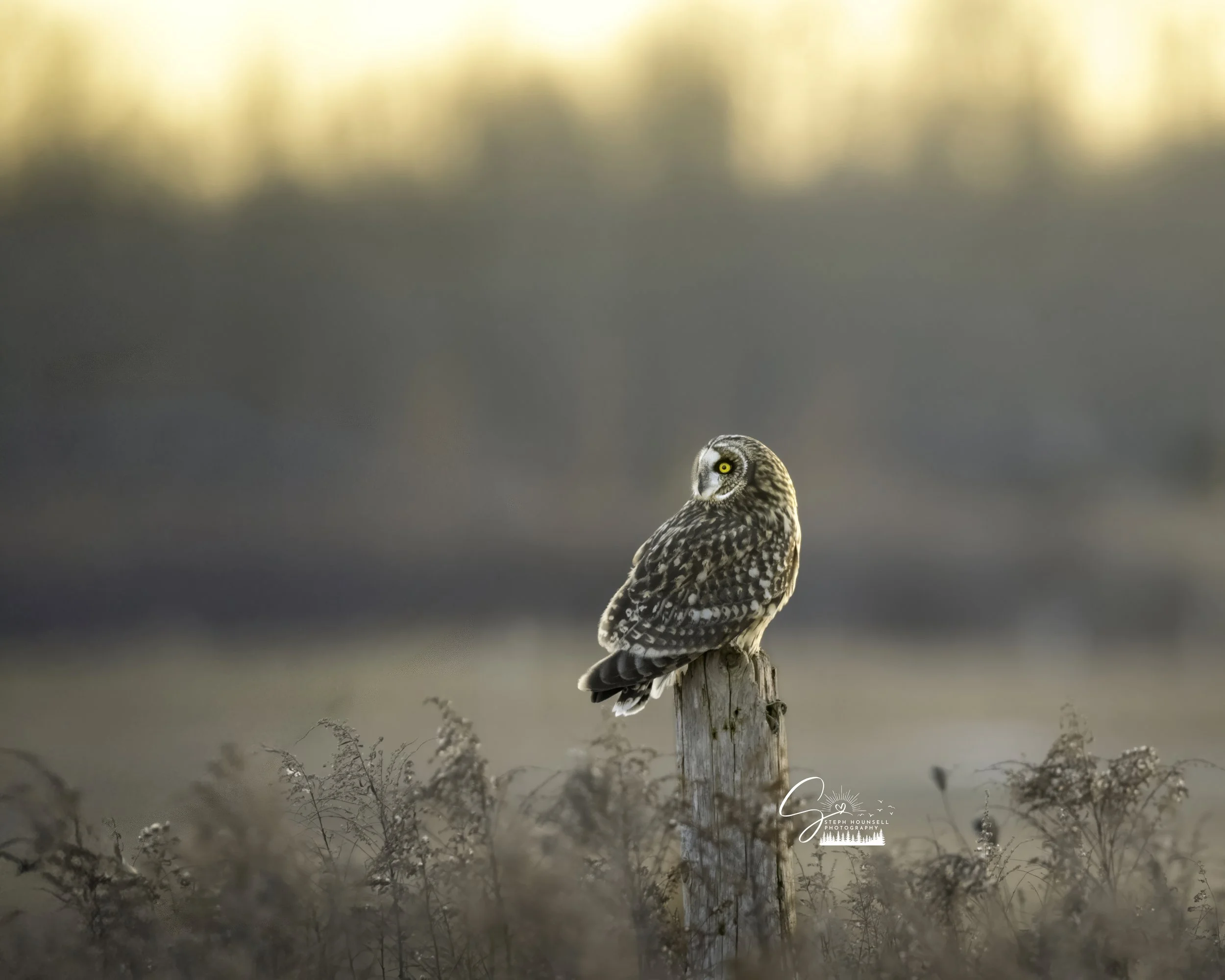
Short Eared Owl, Southwestern Ontario
Owls are incredibly attentive to their surroundings. While their large eyes often capture our attention, their hearing is equally remarkable. They can use sound to help locate what is happening around them, even when they cannot see it. Photographing Short Eared Owls is one of my favourite species. If you give them space and just watch they are incredible hunters and have a strong awareness of their surroundings.
They listen.
They pause.
They pay attention.
And perhaps there is something we can learn from them.
When was the last time you really listened?
Not just listened to someone speaking, but truly listened—to the world around you, to your body, to your thoughts, and to what you might need in that moment.
Life can be incredibly busy. We move from one responsibility to the next, thinking about what needs to be done rather than noticing what is happening right now.
Sometimes we become so accustomed to the noise and demands of everyday life that we stop noticing the quieter messages our bodies and minds are sending us.
We push through the tiredness because there is still work to finish.
We ignore the tension in our shoulders because there are other things that need our attention.
We tell ourselves we're fine when, deep down, we know we aren't feeling our best.
First, we notice. Then, we listen.
Mindfulness begins with noticing.
Perhaps you notice that your shoulders are tense. Maybe you realize you've been holding your breath, you're more irritable than usual, or you're simply exhausted.
Noticing doesn't mean we have to immediately fix anything.
It simply means we become curious.
What is my body trying to tell me?
Our bodies are constantly communicating with us. Learning to pay attention to those signals can help us recognize when we may need to slow down, rest, move, connect with someone, or seek appropriate support.
Mindfulness isn't about assuming that every symptom has a simple explanation, and listening to our bodies doesn't mean we can prevent every illness or health concern.
Rather, it gives us an opportunity to become more aware of ourselves and respond with greater care instead of simply pushing through.
Listen to your thoughts.
Listening isn't only about what we hear around us. It also means becoming aware of what is happening inside us.
Our minds can be noisy places.
I'm not doing enough.
I should be able to handle this.
I don't have time to rest.
Everyone else seems to have it together.
Instead of immediately judging these thoughts—or believing everything they tell us—we can simply notice them.
"I'm having the thought that I'm not doing enough."
That small shift can create some space between ourselves and the thought.
We don't have to judge every thought we have. We can notice it, become curious about it, and decide whether it is helpful or whether we can let it pass.
Listen to the world around you.
The next time you're outside, pause for a moment.
What can you hear?
Perhaps it is the wind moving through the trees, a bird calling from somewhere nearby, water moving along the shoreline, or leaves rustling beneath your feet.
Maybe, if you're lucky, you'll hear the distant call of an owl.
You don't need to identify every sound.
Simply listen.
When we intentionally pay attention to the sounds around us, we give our minds an opportunity to step away from the constant stream of thoughts and return to the present moment.
What do you need?
Perhaps one of the most important questions we can ask ourselves is:
What do I need right now?
Not what should I be doing.
Not what does everyone else need from me.
What do I need?
Maybe the answer is rest.
Maybe it's movement, time outside, connection with a friend, a quiet cup of coffee, a walk with the dog, or time with a camera.
And sometimes, what we need is support from someone who can help us work through what we're experiencing.
We may not always be able to change our circumstances, but awareness gives us information. And sometimes that awareness is the first step toward making a different choice.
A simple practice
The next time you're outside, try this:
Pause.
Take a few slow breaths.
Notice.
What can you see? What can you hear? What can you feel?
Listen.
What is your body telling you? What thoughts or emotions are present?
Respond.
Ask yourself what you need in this moment—and, if possible, give yourself permission to honour that need.
Like an owl, we don't always have to rush.
We can observe.
We can listen.
We can wait.
We can notice what is happening around us before we respond.
In a world that constantly encourages us to move faster, accomplish more, and keep going, there is value in slowing down enough to hear the quieter messages.
Notice. Listen. Pause. Respond.
You might be surprised by what you discover when you take the time to truly listen.
Coming Soon: The Art of Noticing
What if mindfulness didn't have to mean sitting still with your eyes closed?
What if it could begin with simply stepping outside, slowing down, and noticing what is already around you?
Later this week, I'll be sharing more about The Art of Noticing, a photography and mindfulness workshop designed to help us slow down, reconnect with the present moment, and discover the benefits of paying attention to the world around us.
Through photography and mindful observation, we'll explore how something as simple as looking more closely can change the way we experience a familiar place—and perhaps even the way we experience ourselves.
Stay tuned for the workshop announcement later this week.
I would love to have you join me in slowing down, looking closer, and discovering what we might otherwise miss. 🌿📷